
Dance Movement Therapy in Brooklyn & New York with Deniz Oktay, LCAT
Dance Movement Therapy for adults in Williamsburg, Brooklyn and online across New York. No dance experience required - movement is used for awareness, expression, and psychotherapy.
Movement may help bring attention to experiences that are difficult to name
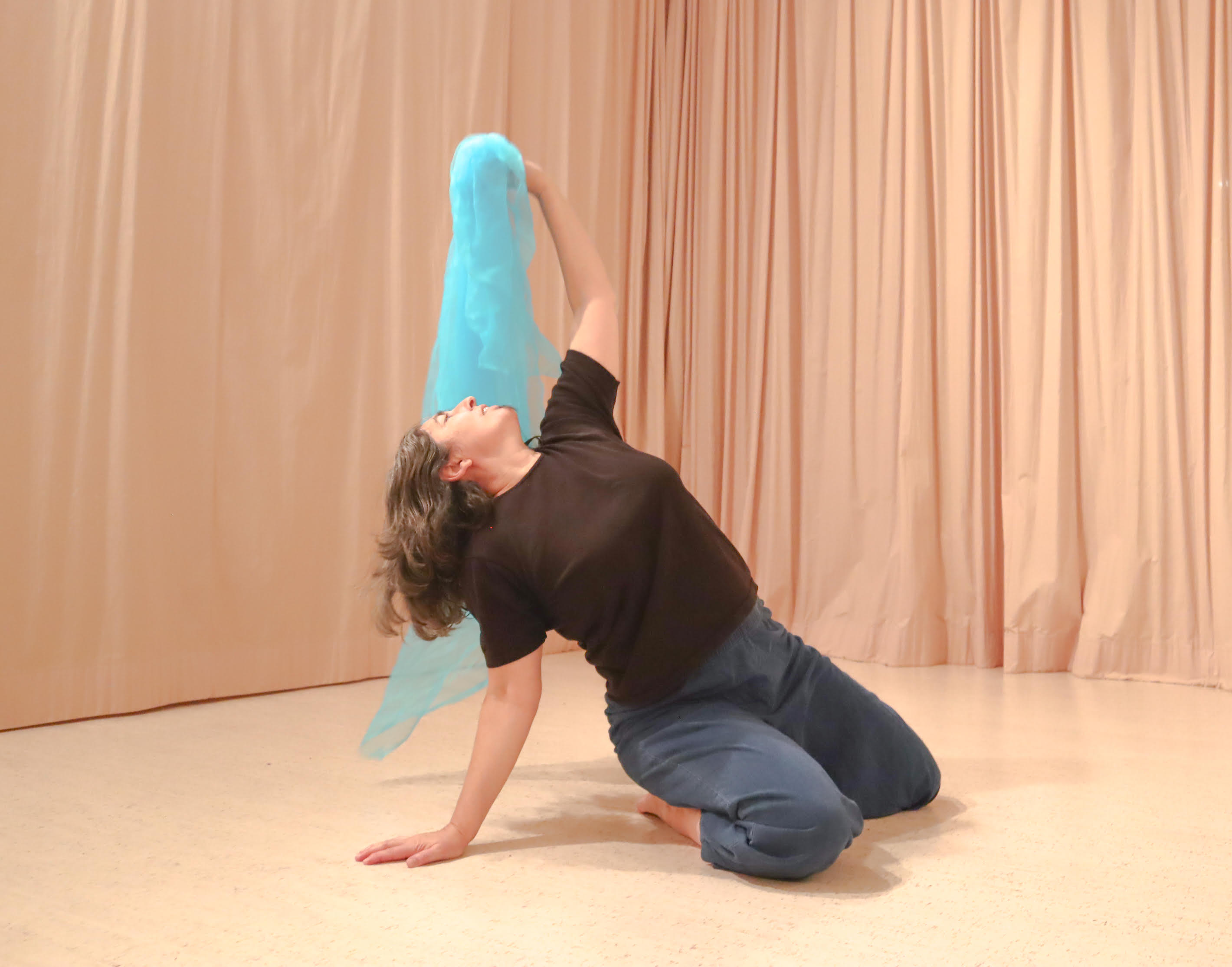
Dance Movement Therapy is not about performing, following choreography, or moving in a way that looks beautiful. It is psychotherapy that makes room for the body’s language -gesture, rhythm, stillness, distance, posture, and the impulses that appear before words.
What is Dance Movement Therapy?
The American Dance Therapy Association defines dance/movement therapy as the psychotherapeutic use of dance, movement, body awareness, and embodied communication to support healing and well-being. It is a graduate-level mental health profession, not a dance class or wellness activity.
In our work, movement may help bring attention to experiences that are difficult to name, reveal how a familiar pattern is organized physically, or offer a way to experiment with something new. We may notice the impulse to turn away, the effort involved in taking up space, the rhythm of approaching and retreating, or the difference between movement that is performed and movement that feels internally true.
Movement is never interpreted through a fixed code. I will not tell you that a gesture always means one thing. We explore what it feels like from the inside, what associations it carries for you, and how it connects, or does not connect, to the rest of your life.
What is Authentic Movement?
One practice I am certified in is Authentic Movement. In its traditional form, a mover waits for an inner impulse and follows it while a witness remains present and attentive. The practice can be quiet and precise: a gesture, a shift, a period of stillness, or a sequence that unfolds without choreography.
Authentic Movement is adapted to the person. Closing the eyes is not required, and it may not be appropriate for everyone. We may work with softened vision, seated movement, shorter periods, or another form of witnessing. Consent, pacing, and your ability to remain connected to the present matter more than following a formal structure.
What concerns can dance movement therapy support?
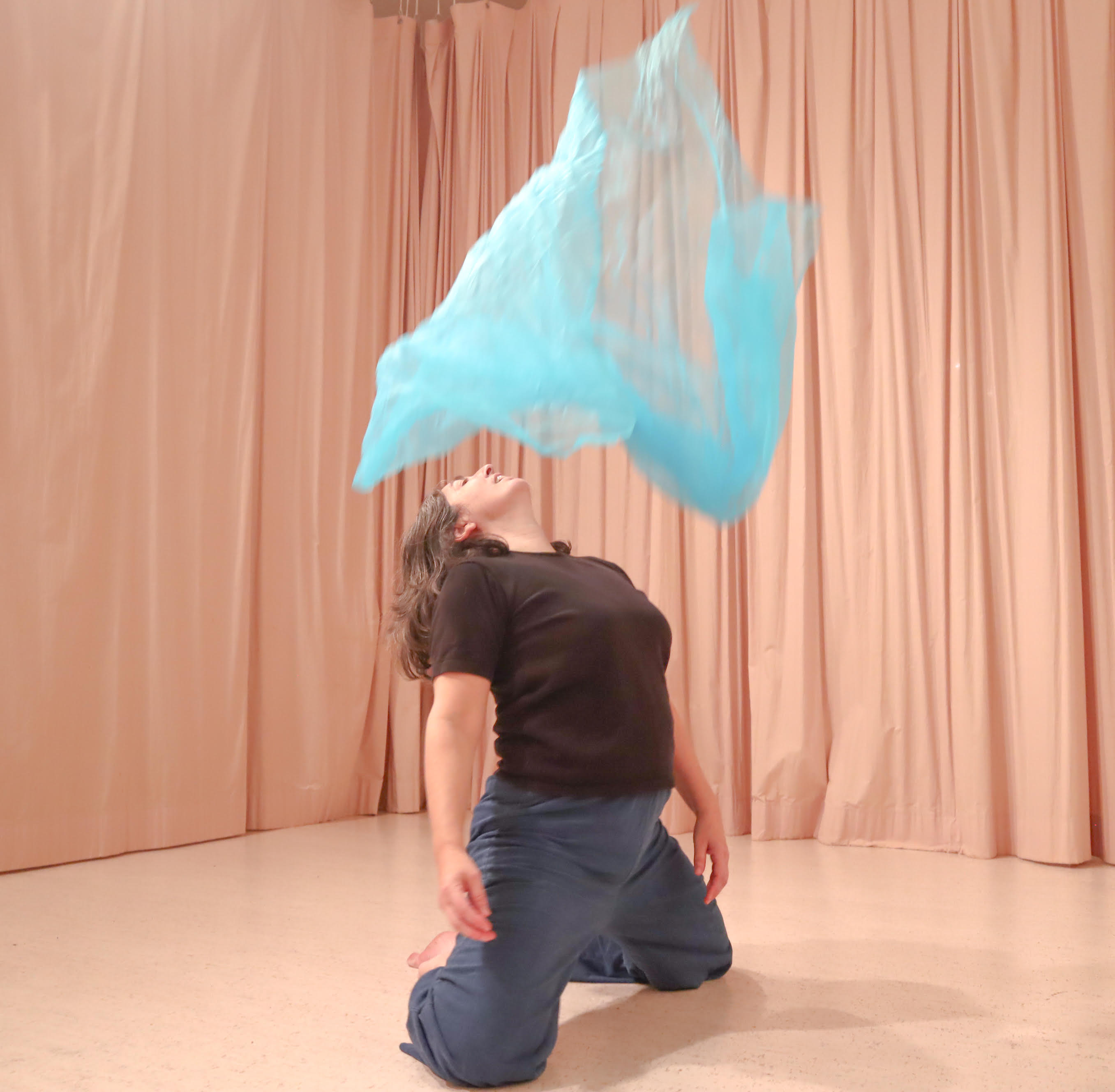
Dance Movement Therapy may support adults experiencing anxiety, trauma-related responses, chronic stress, depression, dissociation, body disconnection, grief, relationship patterns, perfectionism, creative blocks, and major life transitions. It can be particularly resonant when you have talked extensively about a pattern but still feel caught in it, or when emotion is present but language feels too narrow.
Artists, actors, dancers, musicians, writers, and other creative professionals may appreciate a therapy that understands expression as more than a metaphor. Trained performers may also need a place where the body is not evaluated, corrected, or required to produce. The therapeutic question is not ‘How well can you move?’ but ‘What is it like to be you in this moment?’
Dance Movement Therapy does not guarantee a particular emotional release or replace medical, psychiatric, or specialized trauma care when those services are needed. The approach is selected according to clinical fit, your preferences, and the goals we establish together.
What happens during a dance movement therapy session?
A session often begins with conversation. We may talk about what is happening in your life, what has been difficult, and what feels most present. I may notice a change in breath or posture and ask whether you are aware of it. From there, we might stay with words, experiment with a small movement, or allow a longer exploration to develop.
Movement can be as subtle as turning your head, changing how you sit, pressing your feet into the floor, following a hand gesture, or allowing yourself to become still. It can also be more expansive when that feels natural. Music may be used, but it is not required.
After a movement experience, we make time for integration. You may speak, draw, write, notice an image, or connect the experience to a relationship or recurring pattern. Movement is not used simply for expression; it is held within an ongoing psychotherapeutic relationship.
Other common questions
None. You do not need rhythm, flexibility, confidence, coordination, or a dance background. You are not compared with anyone else, and there is no correct movement to find. The body you have, the range of movement available today, and even your resistance to moving are enough to begin.
If you are a trained dancer or performer, the work is not technique coaching. We may instead explore what happens when movement does not need to serve an audience, director, role, or aesthetic standard.
Dance Movement Therapy does not require touch. Most work involves your own movement, my witnessing, verbal reflection, and the relational use of space. If mirroring or shared movement is introduced, we discuss what feels comfortable. Hands-on Biodynamic Craniosacral Therapy is a separate service with explicit consent and is never assumed as part of Dance Movement Therapy.
Yes. Dance Movement Therapy can be adapted for secure video sessions with adults located throughout New York State. You may move seated or standing, within or outside the camera frame, and you decide what is visible. Many meaningful movements require very little space. For some people, moving in a familiar environment reduces performance pressure and makes the work more accessible.
Virtual sessions require adequate privacy, a stable connection, and a clinical situation that can be supported safely through outpatient teletherapy. We will discuss whether online or in-person work is the better fit.
Talk remains part of the work, but language is not the only route into experience. Rather than discussing a boundary only as an idea, we might notice what happens when you physically create distance. Rather than describing confidence, we might explore how support, weight, gaze, or space change when you feel more present.
This does not make Dance Movement Therapy automatically deeper or better than talk therapy. It offers a different pathway. Some people benefit from moving between the two; others prefer primarily verbal work.
Dance Movement Therapy may suit adults who are curious about embodied experience, feel limited by words alone, or want to understand the relationship between movement, emotion, identity, and connection. It may be especially meaningful for creative people, people recovering a sense of ownership in their bodies, and those who notice that protective patterns appear physically before they can think about them.It may not be appropriate during an acute crisis or when a more structured, specialized, or higher level of treatment is needed. We assess fit together rather than assuming movement is helpful for everyone.
I am a New York State Licensed Creative Arts Therapist and a Board-Certified Dance/Movement Therapist. BC-DMT is the advanced board-certified credential in the profession and reflects additional clinical experience and competence beyond entry-level registration. I bring more than 20 years of clinical experience, including 16 years in inpatient psychiatry at Bellevue Hospital, as well as certification in Authentic Movement.
Before becoming a therapist, I came to this work through dance. My practice integrates the rigor of mental health treatment with a long-standing understanding of movement as communication—not performance.
In-person Dance Movement Therapy is available at my studio in Williamsburg, Brooklyn. Virtual sessions are available to adults located throughout New York State. The studio allows room for movement, but a session does not require you to use the whole space or to move at all.
